
Personal care at home: How do I help my mother wash without taking away her dignity?
This article provides practical tips for caregivers who want to assist their loved ones with personal care,…
Read article
This article provides practical tips for caregivers of elderly individuals with swallowing problems, such as recognizing warning signs and creating a safe eating environment.
If your mother keeps choking, it can be very concerning. Swallowing problems are common among the elderly and can lead to dangerous situations. It is important to know how to support her safely while eating and drinking. In this article, we discuss various aspects of swallowing problems at home and how to address them.
At home, there are several warning signs of swallowing problems to watch for. It is important to recognize these signs in a timely manner, especially if you are caring for someone who has difficulty swallowing, such as an elderly person or someone with dementia.
Warning signs of swallowing problems:
If you notice these signs, it is important to discuss this with the person in question and possibly contact a speech therapist for help with swallowing. This can help improve the situation and ensure safety during meals.
What are your experiences with swallowing problems in the person you care for?
When dealing with swallowing problems at home, it is important to ensure that your mother can eat safely. Here are some tips to support this:
If you have questions about specific dietary needs or swallowing problems, discuss this with a healthcare provider. This can help provide the right support. What do you find most challenging when it comes to your mother's eating?
When swallowing problems occur at home, it is important to pay close attention. If you notice that your loved one is having difficulty swallowing or is choking more often, it is wise to involve a speech therapist or doctor. This is especially true if your loved one has dementia, as swallowing problems are more common and require extra attention.
When to involve:
It is important to discuss these concerns at a calm moment. Listen to your loved one's feelings and offer to contact a speech therapist or general practitioner together. This can help improve the situation and lighten the care burden.
What are your concerns about your loved one's swallowing problems?
When dealing with swallowing problems at home, it is important to adjust the pace of eating and drinking. This can help prevent choking, especially in older individuals or those with dementia. Here are some tips to make eating and drinking safer:
It is important to continue observing and making adjustments as needed. How are you managing in this situation?
In the event of acute choking, it is important to act quickly and effectively. This can be especially crucial for older individuals or those with swallowing problems at home, such as those with dementia. Here are some steps you can follow:
It is also good to know that speech therapists can help with swallowing problems. They can teach techniques for safe eating and drinking. Always be alert to signs of choking, especially in older individuals.
Do you have specific concerns about someone in your environment?

This article provides practical tips for caregivers who want to assist their loved ones with personal care,…
Read article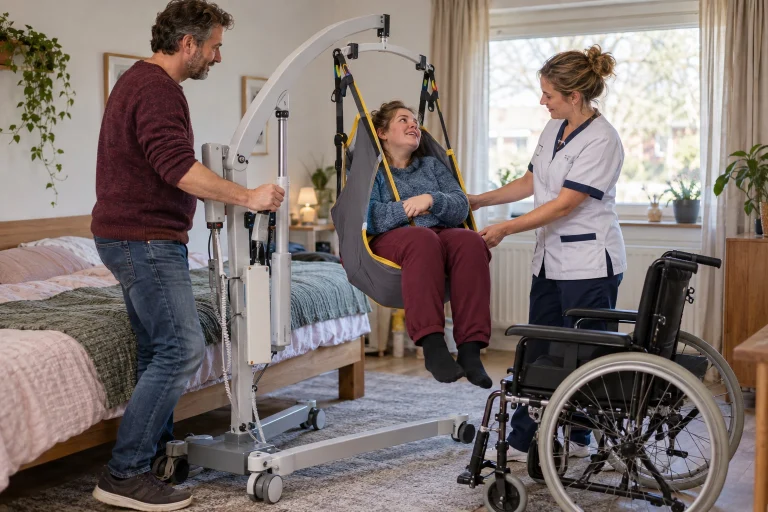
This article provides practical tips and tools for caregivers to safely move someone from bed to a…
Read article
Organizing medication for an elder can be challenging. This article provides practical tips to maintain an overview…
Read article
Caring for someone can raise many questions. Whether it's practical questions, doubts, sharing your worries or simply wanting to tell your story.
Sophie listens and thinks along with you – with understanding for your situation.