
Personal care at home: How do I help my mother wash without taking away her dignity?
This article provides practical tips for caregivers who want to assist their loved ones with personal care,…
Read article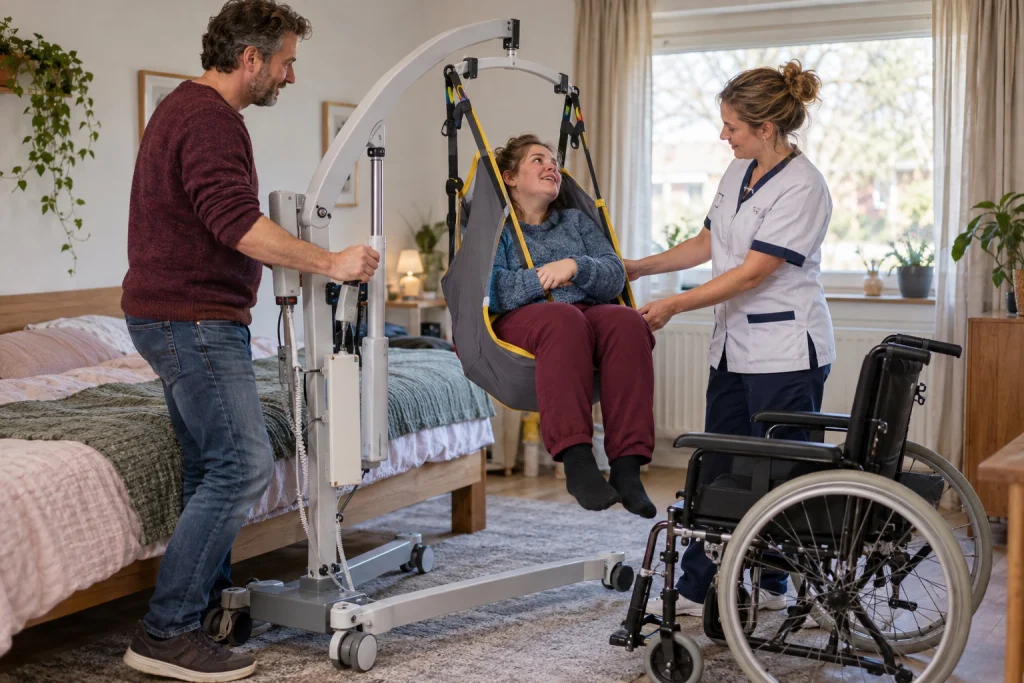
Safe Lifting and Moving Without Overloading Your Back.
This article provides practical tips and tools for caregivers to safely move someone from bed to a chair without overloading their back.
Helping someone out of bed can be a challenging task, especially if you want to avoid straining yourself. It is important to know how to do this safely, taking into account the capabilities of the person you are helping and the available tools. This article discusses the principles of safe lifting, the use of transfer aids, and how to enlist help.
When helping someone out of bed, it is important to lift safely. This not only prevents back pain but also protects your shoulders and joints. Here are some basic principles for safe lifting:
It is important to look at what the person can do themselves and what space you have. This makes lifting and moving safer and easier.
It is important not to pull when helping someone out of bed, as this can heavily strain your back, shoulders, and joints. When lifting and moving a loved one, it is essential to protect your body. When helping someone out of bed, you can better utilize aids such as a slide sheet or hoist. These tools reduce the risk of injury and make the transfer from bed to chair safer.
By lifting and moving safely, you can prevent back pain in caregiving and make caring for your loved one easier. What do you need to do this safely?
There are various transfer aids available to help someone out of bed and lift safely without overloading your back. These tools are designed to reduce the strain on your body and ensure the safety of both the caregiver and the care recipient.
Examples of transfer aids include:
It is important to know that the proper use of these aids requires instruction. Therefore, ask a community nurse, physiotherapist, or occupational therapist for advice and instructions.
If you need an aid, you can request this through the WMO desk for aids for independent living or through your health insurer for home medical care. If you need something temporarily, you can often borrow or rent aids from a home care store nearby.
Do you have specific questions about an aid you want to use?
Physiotherapy and occupational therapy can play an important role in safely lifting and moving someone, such as when helping someone out of bed. These therapies provide support and advice to reduce the strain on your body and prevent back pain.
How physiotherapy and occupational therapy help:
It is important to seek advice in a timely manner, especially if you notice that a movement feels unsafe. You can find more information and seek help through {{loket:ergotherapie}}.
What would you like to learn about safe lifting and moving?
When lifting someone out of bed, there are various warning signs to watch for. These signals can indicate that you are overloading your back or other parts of your body.
It is crucial to use aids such as a slide sheet or hoist, and to receive instructions from a professional such as a community nurse or physiotherapist. This not only helps to lift safely but also prevents back pain in caregiving.
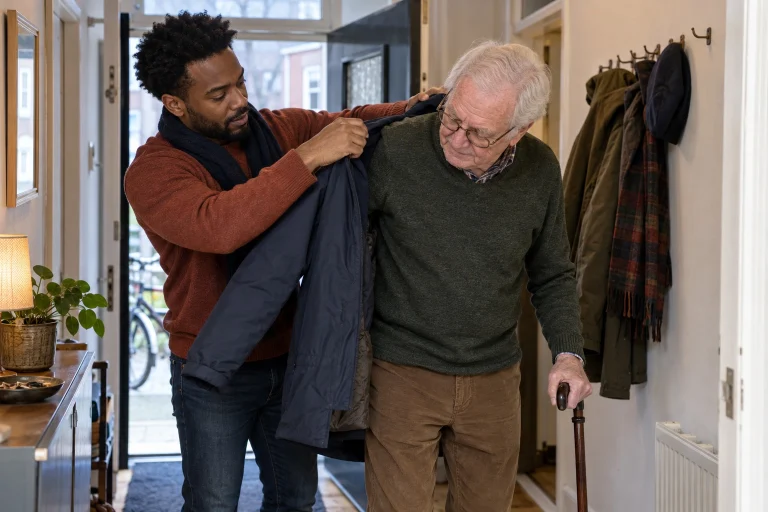
This article provides practical tips for caregivers who want to assist their loved ones with personal care,…
Read article
Organizing medication for an elder can be challenging. This article provides practical tips to maintain an overview…
Read article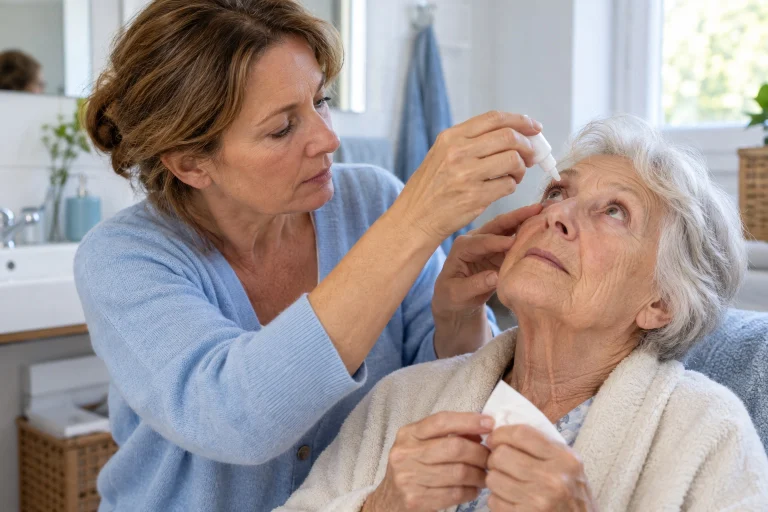
This article provides practical steps for safely administering eye drops to a loved one, focusing on hygiene,…
Read article
Caring for someone can raise many questions. Whether it's practical questions, doubts, sharing your worries or simply wanting to tell your story.
Sophie listens and thinks along with you – with understanding for your situation.