
Personal care at home: How do I help my mother wash without taking away her dignity?
This article provides practical tips for caregivers who want to assist their loved ones with personal care,…
Read article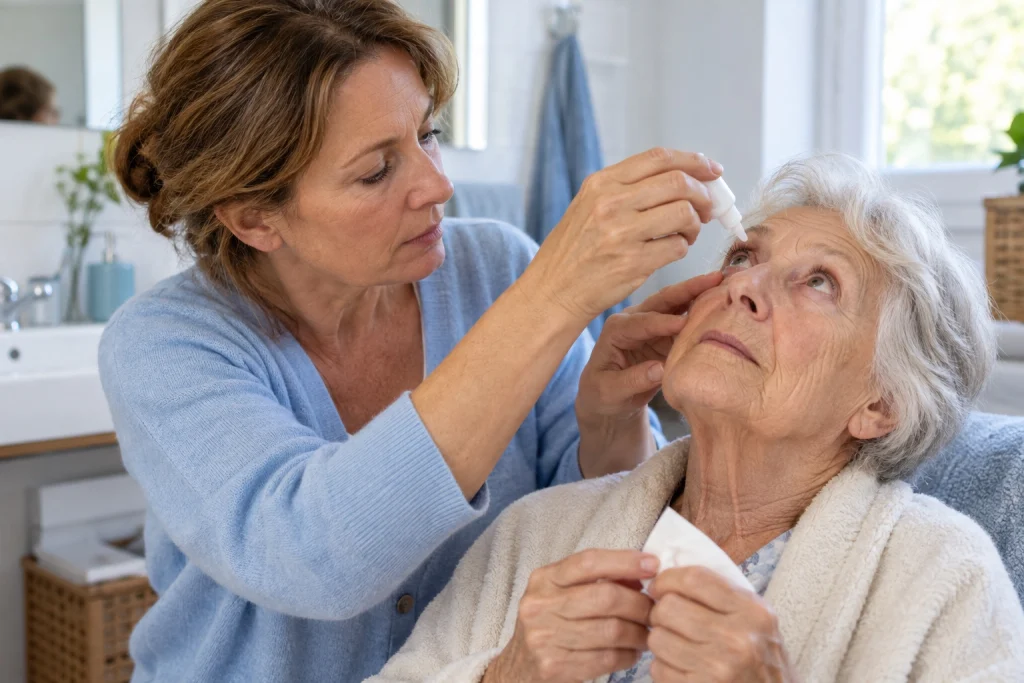
This article provides practical steps for safely administering eye drops to a loved one, focusing on hygiene, positioning, and seeking assistance.
Administering eye drops can be a challenge, especially if you are doing this for an elderly person. It is important to do this safely and effectively. In this article, we discuss the steps you can follow to administer eye drops, when to ask for help, and how to approach this task best.
When administering eye drops, it is important to follow hygiene rules. This ensures that the procedure is safe and effective. Here are some hygiene rules to keep in mind:
If you feel uncertain about administering eye drops or if the situation changes, it is important to ask for help. This can be from a healthcare professional or an experienced caregiver. They can provide you with the right instructions and help you feel competent in administering eye drops.
What would you like to know about administering eye drops?
When administering eye drops, the position of both the caregiver and the recipient is important. Ensure that the recipient is sitting or lying comfortably. It is helpful if the person leans their head slightly backward. This makes it easier to get the drops into the eye.
Here are some steps for administering eye drops:
If you have doubts or if the person feels uncomfortable, ask for help from a healthcare professional. It is important to know that taking on this caregiving task is a personal choice. Feel free to ask questions or seek help if you are unsure about administering eye drops.
What would you like to know about administering eye drops?
When administering eye drops, it is important to follow a clear order. Here are the steps you can follow:
If you have doubts or if the patient finds it difficult, it is good to ask for help. This can be a healthcare professional or someone with experience. It is important that you feel comfortable administering eye drops.
Administering eye drops can be an important task for caregivers. It is essential to know how to store these medications properly and what is in the package insert.
Storing eye drops:
Information in the package insert:
Make sure you are well-prepared before administering eye drops. Do you have specific questions about the use or the package insert?
When administering eye drops, it is important to know when to ask for help. Administering eye drops can be a responsibility that you take on as a caregiver. It is essential that you feel confident about the procedure. If you have doubts or are unsure how to do it, ask for help. This could be a nurse or doctor who can explain how to do it and even demonstrate it.
Additionally, it is good to know that as a caregiver, you are allowed to perform medical tasks as long as you have sufficient knowledge and skills. If you feel overwhelmed or it is too much for you, it is important to discuss this with the community nurse or general practitioner. Together, you can look for a solution or professional support.
When have you needed help with administering eye drops?
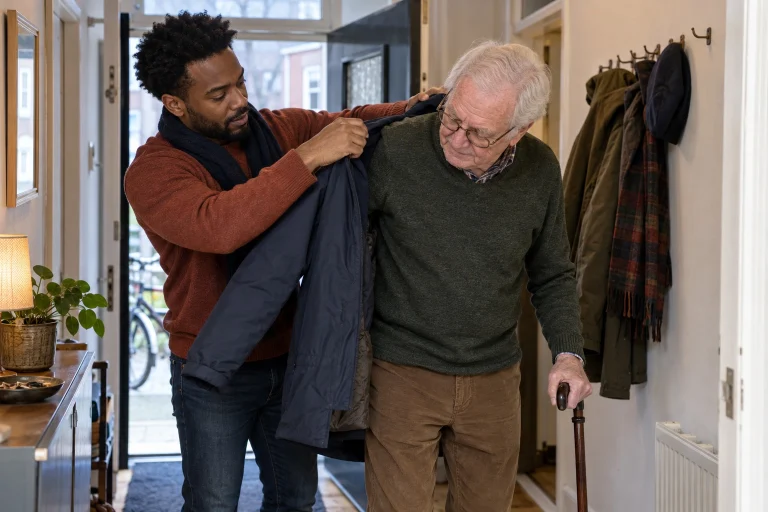
This article provides practical tips for caregivers who want to assist their loved ones with personal care,…
Read article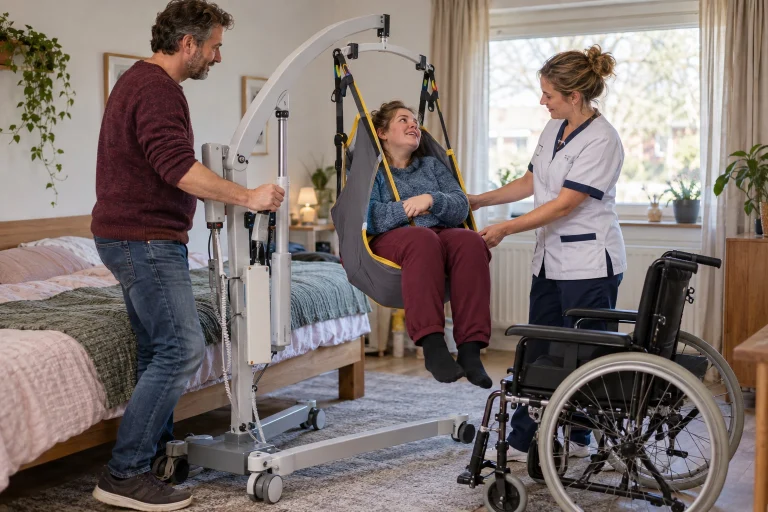
This article provides practical tips and tools for caregivers to safely move someone from bed to a…
Read article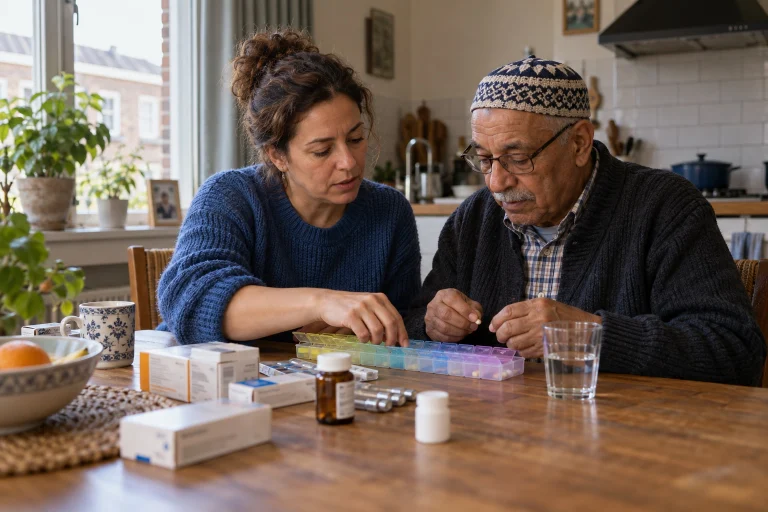
Organizing medication for an elder can be challenging. This article provides practical tips to maintain an overview…
Read article
Caring for someone can raise many questions. Whether it's practical questions, doubts, sharing your worries or simply wanting to tell your story.
Sophie listens and thinks along with you – with understanding for your situation.