
Personal care at home: How do I help my mother wash without taking away her dignity?
This article provides practical tips for caregivers who want to assist their loved ones with personal care,…
Read article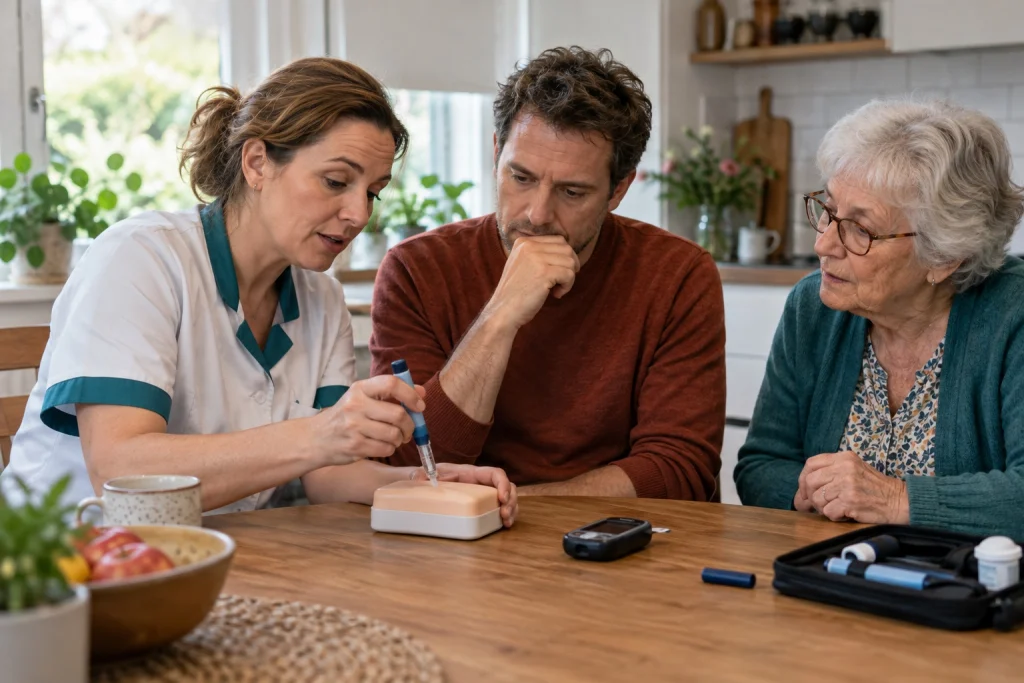
This article discusses what you need to know before giving an injection as a caregiver, including authority, instruction, and safety.
As a caregiver, it may be necessary to give an injection to your loved one. It is important to understand what you need to learn for this and what responsibilities you have. This article helps you to be well-prepared to get started.
As a caregiver, you are allowed to give an injection, but there are important things to learn and consider.
Knowledge and skills Before giving an injection, you must have sufficient knowledge and skills. This means you need to understand how to perform the injection safely and correctly. Therefore, have a nurse or doctor explain and demonstrate it to you thoroughly. Practice together so that you feel confident.
Free choice It is important to know that giving an injection is a free choice. You can always ask questions and take time to think. If you doubt whether it is too much for you, you do not have to do it. Discuss this with the district nurse or general practitioner. They can look for solutions with you.
Making agreements Discuss the consequences and risks of the procedure in advance. Ensure that everything is well documented so that it is clear who does what. This prevents misunderstandings in the future.
What do you find the most difficult about learning these procedures?
To give an injection as a caregiver, it is important to be well-prepared. Here are some steps you need to learn:
It is important not to give an injection based solely on information from the internet or videos. Professional instruction is necessary. Do you want to know more about how to approach this?
When giving injections as a caregiver, there are various risks and responsibilities to consider. It is important to realize that taking over a care task, such as giving injections, is a free choice. You do not have to take on this responsibility if you do not feel comfortable with it.
Risks:
Responsibilities:
It is wise to establish agreements about who is responsible for the injections and to consult with a care organization for any professional support. This helps to prevent misunderstandings and ensures that you are well-prepared.
What do you find the most difficult about the idea of giving an injection?
To give an injection safely as a caregiver, it is important to be well-prepared. Here are some steps you can follow:
It is crucial never to give an injection without the proper knowledge and skills. Do you feel overwhelmed? Then it is good to discuss that and look for a solution. How do you feel about the idea of giving an injection?
When you give injections as a caregiver, it is important to know when to stop. This may be necessary if your loved one's situation changes or if you find the responsibility too heavy.
Important points to consider:
It is crucial to regularly evaluate whether giving injections is still within your capabilities. Contact the diabetes nurse or doctor for advice on specific signs and situations.
What are your thoughts on giving injections?

This article provides practical tips for caregivers who want to assist their loved ones with personal care,…
Read article
This article provides practical tips and tools for caregivers to safely move someone from bed to a…
Read article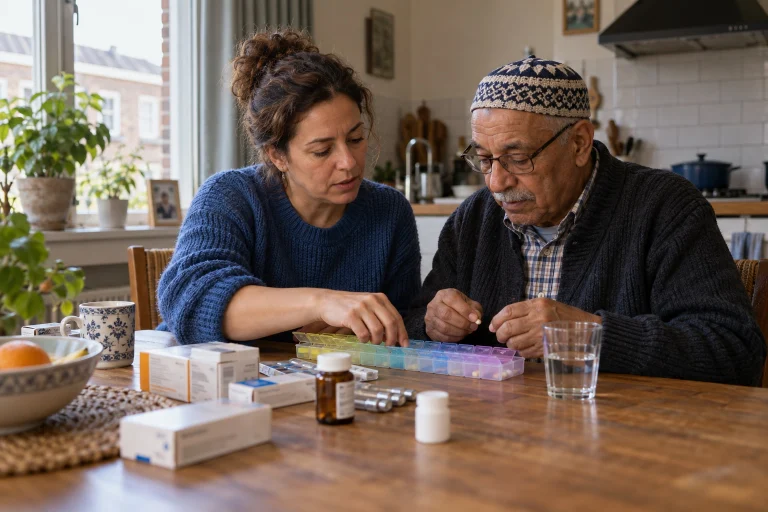
Organizing medication for an elder can be challenging. This article provides practical tips to maintain an overview…
Read article
Caring for someone can raise many questions. Whether it's practical questions, doubts, sharing your worries or simply wanting to tell your story.
Sophie listens and thinks along with you – with understanding for your situation.