
Personal care at home: How do I help my mother wash without taking away her dignity?
This article provides practical tips for caregivers who want to assist their loved ones with personal care,…
Read article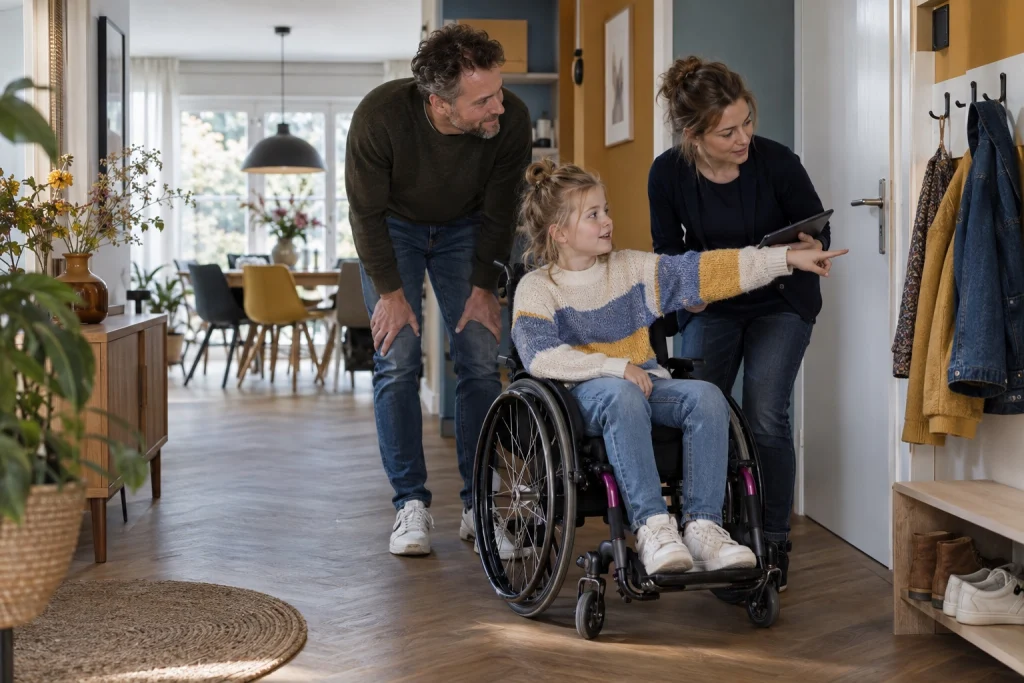
This article provides practical tips to make the home safer for the elderly and reduce the risk of falls.
It is important to make the home safe for your father, especially if he often falls. There are various risk factors and adjustments you can consider to promote fall prevention.
When it comes to fall prevention for the elderly at home, there are several key risk factors to consider. Falls often occur in and around the home and can have significant consequences for the independence of the elderly. Some risk factors include:
Additionally, movement and muscle strength also play a role. It is important to work with the elderly person to find ways to make the home safe. If your loved one has already fallen or is afraid of falling, it is wise to discuss this with a general practitioner, physiotherapist, or occupational therapist.
By addressing these risk factors, you can reduce the chance of falls and improve safety at home. What would you like to do to make the situation safer for your loved one?
Lighting plays an important role in fall prevention for the elderly at home. Poor lighting can lead to accidents, especially if someone is already unsteady or often falls. Here are some practical tips to improve the lighting in the house:
By improving the lighting in the house, you make your loved one's life much safer and more comfortable. Do you already have specific areas in mind where you want to improve the lighting?
In fall prevention for the elderly at home, it is important to address loose rugs and obstacles. These can pose a significant risk for falls. Here are some practical steps you can take:
By making these adjustments, you can make the home safer and reduce the fall risk for the elderly. Do you already have specific places in the house that you are concerned about?
To make the bathroom safer and promote fall prevention for the elderly at home, there are several practical adjustments you can consider.
Small adjustments:
Larger adjustments:
For larger adjustments, your municipality may offer reimbursements through the Wmo. It is important to submit a request for adjustments first before having anything done. You can arrange this at the Wmo desk.
By making these adjustments, you can significantly reduce the chance of falls in the bathroom and improve the safety of your loved one. What would you like to know about applying for these adjustments?
Shoes play an important role in fall prevention for the elderly at home. Inappropriate footwear can increase the risk of falling, especially if the shoes do not fit well or lack sufficient grip. It is crucial to ensure well-fitting, sturdy shoes with a non-slip sole. This helps the elderly walk better and maintain their balance.
Additionally, it is important to make the environment safe. Consider removing loose rugs and improving the lighting. Together with your loved one, you can look at these aspects to make the home safer.
In fall prevention for the elderly at home, it is also good to pay attention to movement and muscle strength. If your loved one has already fallen or is afraid of falling, discuss this with a general practitioner or therapist. They can help find a safe way to stay active.
What steps do you think you can take to improve your loved one's shoes?
Managing medication safely is essential for fall prevention among the elderly at home. Keeping track of medications is crucial. Here are some practical steps:
By following these steps, you make the home safer and help reduce fall risk. How do you feel about managing medication for your loved one?
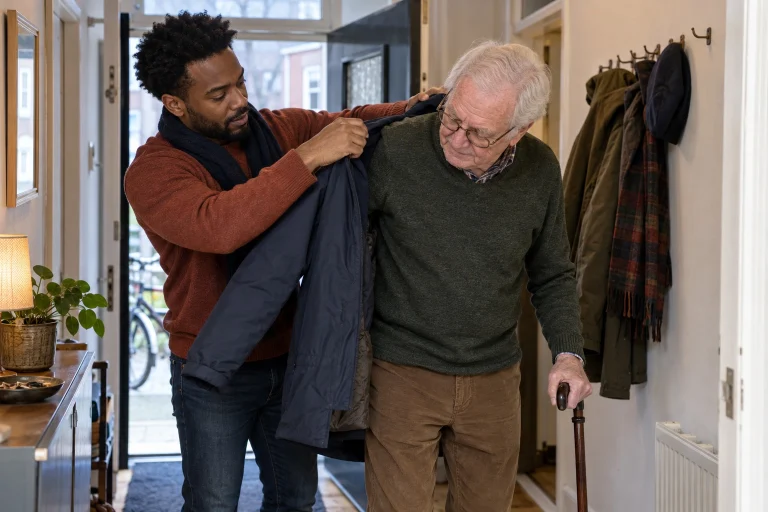
This article provides practical tips for caregivers who want to assist their loved ones with personal care,…
Read article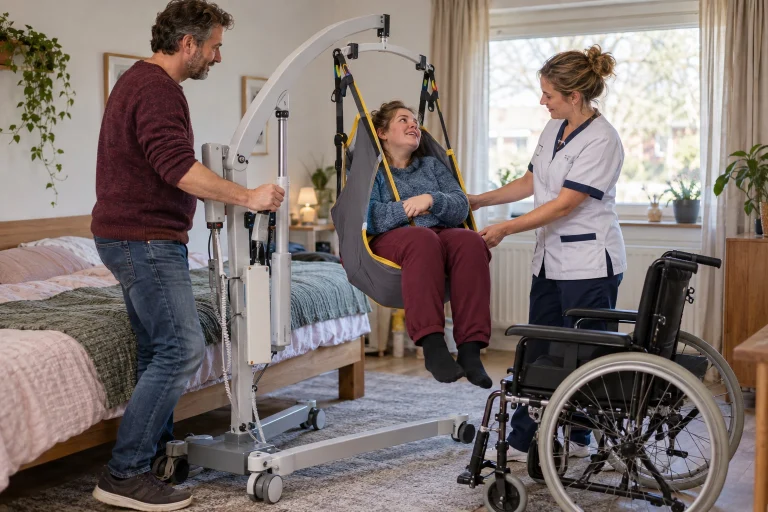
This article provides practical tips and tools for caregivers to safely move someone from bed to a…
Read article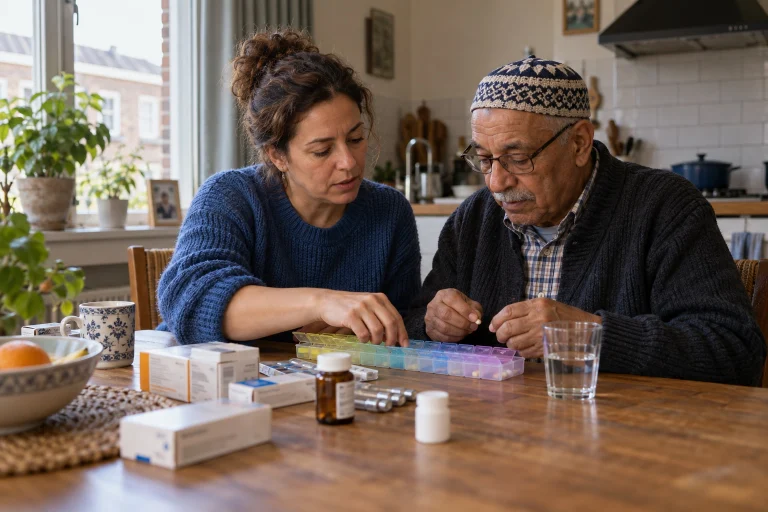
Organizing medication for an elder can be challenging. This article provides practical tips to maintain an overview…
Read article
Caring for someone can raise many questions. Whether it's practical questions, doubts, sharing your worries or simply wanting to tell your story.
Sophie listens and thinks along with you – with understanding for your situation.