
When am I a caregiver?
Many people care for others without calling it caregiving. This article explains what caregiving is, how it…
Read article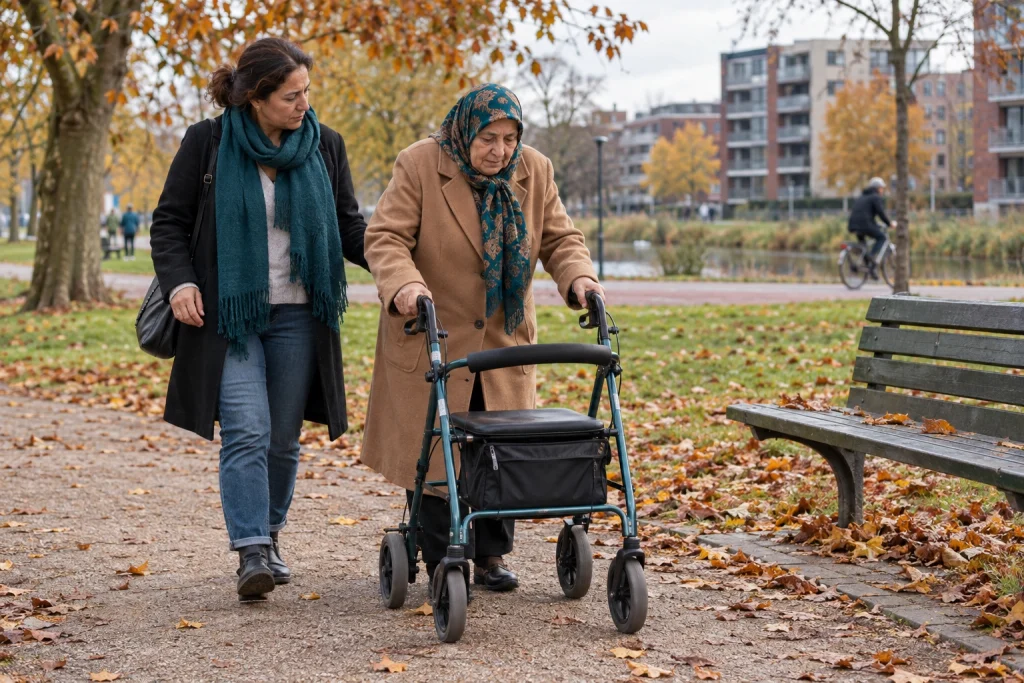
This article provides guidance for caregivers of people with Parkinson's, focusing on coping with fluctuating days and increasing care needs.
Caring for someone with Parkinson's can be challenging, especially when one day everything seems to go well and the next day nothing does. It is important to prepare for these fluctuating days. This article discusses how to maintain a daily routine, schedule medication times, reduce fall risk, communicate effectively, and find support for yourself as a partner.
Maintaining a good daily routine is important when caring for someone with Parkinson's. This can help manage the fluctuating days better. Here are some tips to maintain a daily routine:
By following these steps, you can better manage the care for someone with Parkinson's and give the days more structure. What would help you maintain a better daily routine?
When caring for someone with Parkinson's, it is important to reduce the risk of falls. Here are some steps you can take:
Also talk to your loved one about what they need and discuss the changes together. This can help lighten the care and reduce the risk of falls. Have you thought about what assistive devices or adjustments you could use?
Communication is essential when caring for someone with Parkinson's. It can help to talk openly and honestly about what both of you need. Here are some tips for better communication:
You can find information and support at the national Parkinson's association. This can be valuable for you as a partner or caregiver. What would you like to discuss with your loved one?
Caring for someone with Parkinson's can be a significant challenge, especially as care needs increase. Here are some ways to lighten the care for your partner.
Engage professional help: It is important to engage professional help or volunteers in a timely manner. This can help you distribute the care better and relieve yourself.
Respite care: Substitute care, also known as respite care, can give you some breathing room. This is a temporary solution where someone else takes over the care, allowing you time for yourself.
Talk about it: Open communication with your partner is crucial. Discuss what both of you need and expect from each other. This can help separate care from your relationship as partners and loved ones.
Seek support: Contact the national Parkinson's association for information and peer support. Talking to other caregivers can also provide support and help you share your feelings.
Take care of yourself: Pay attention to signs of overload, such as persistent fatigue or sadness. Take good care of yourself so that you can sustain the care longer.
What would help you the most in this situation?

Many people care for others without calling it caregiving. This article explains what caregiving is, how it…
Read article
This article provides an overview of the changes that occur when caring for someone with dementia and…
Read article
After a stroke, the lives of both the patient and the caregiver change. This article provides practical…
Read article
Caring for someone can raise many questions. Whether it's practical questions, doubts, sharing your worries or simply wanting to tell your story.
Sophie listens and thinks along with you – with understanding for your situation.