
Caring for someone with dementia: what changes and where to find help?
This article provides an overview of the changes that occur when caring for someone with dementia and…
Read article
Many people care for others without calling it caregiving.
This article explains what caregiving is, how it differs from regular care, and how you can ask for help. In the Netherlands, many people care for a loved one, such as a parent or partner. Often this feels natural, but when are you actually a caregiver? It is important to recognize this role because then you are entitled to support and can ask for help.
Caregiving is the unpaid care you provide to someone in your environment, such as a partner, parent, friend, or neighbor, who is ill, aging, or has a disability. You are a caregiver if you regularly care for this person, and it is care based on a personal bond, not from a job. This role often grows slowly; you may start with small tasks like grocery shopping and end up with personal care or arranging appointments.
You may not always be aware of your role as a caregiver because it feels natural. However, it is important to recognize this because you are entitled to support and can ask for help. If you are unsure whether you are a caregiver or what is possible, you can discuss this at the caregiver desk.
When am I a caregiver? You are one if you regularly care for someone who needs your help, even if it sometimes feels natural.
When am I a caregiver?
You are a caregiver if you regularly care for a family member, friend, or neighbor who is ill, aging, or has a disability. This could be for your partner, parent, or child. Caregiving arises from a personal bond and not from a paid position. It can grow slowly; you may start with small tasks like grocery shopping and later accompany them to appointments or help with administration.
It is important to acknowledge that you are a caregiver, even if caring feels natural. This helps you to ask for support and prevents you from becoming overwhelmed. You do not need official registration to call yourself a caregiver. Do you want to know more about the possibilities and support? Then contact {{desk:caregiving}}.
Regular help and caregiving are two different things. When am I a caregiver? This occurs when the care you provide is much heavier, longer, or more intense than what is normal within a household.
Caregiving is often long-term and intensive, and you cannot just stop. It is important to understand this difference, especially if you want to request support from the municipality.
Do you sometimes feel overwhelmed by the care?
When you regularly care for a family member, friend, or neighbor who is ill, aging, or has a disability, you are a caregiver. This can start with small tasks, such as grocery shopping, and can gradually expand to more responsibilities, such as administration or help with personal care. It is important to recognize that you are a caregiver, even if caring feels natural.
You can ask for help in various ways:
It is good to know that you do not have to do everything alone. How do you feel about the idea of asking for help?
When you care for someone with whom you have a personal bond, such as a partner, parent, or friend, you are a caregiver. This applies even if you find caring natural. Caregiving is not just about giving medication or helping with daily care. It also includes tasks such as accompanying to appointments, managing administration, and providing emotional support.
It is important to recognize your role as a caregiver. This helps you to ask for support and prevents everything from falling on you. Write down what help you provide and how much time it takes. This can help you gain better insight into your situation and to discuss it with caregivers.
If you have questions about support, you can contact the caregiver desk. They can assist you further. How do you feel about the idea that you are a caregiver?

This article provides an overview of the changes that occur when caring for someone with dementia and…
Read article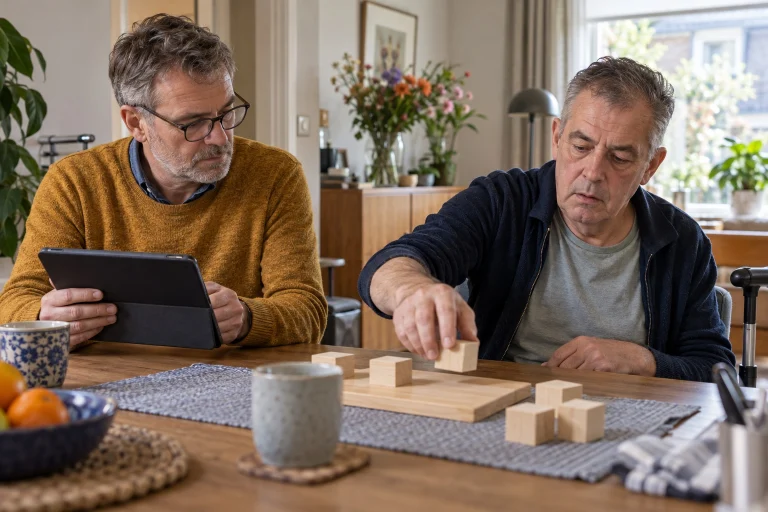
After a stroke, the lives of both the patient and the caregiver change. This article provides practical…
Read article
This article provides practical and emotional support for partners of people with cancer, focusing on self-care and…
Read article
Caring for someone can raise many questions. Whether it's practical questions, doubts, sharing your worries or simply wanting to tell your story.
Sophie listens and thinks along with you – with understanding for your situation.