
Combining informal care and work: making practical arrangements
Combining informal care with work can be challenging, but with the right arrangements and support, it is…
Read article
Remote caregiving is possible with the right support and tools.
This article provides practical tips to keep track of the care for your parents who live far away.
Caring for your parents when they live far away can be a challenge. Remote caregiving requires creativity and good agreements. In this article, we discuss how to stay aware of their needs, even when you cannot always be physically present.
To build a local network for remote caregiving, there are several steps you can take. It is important to maintain good contact with people who live close to your parents. This can be family, friends, or neighbors. They can help you with practical matters and keep you informed about the situation.
It is good to know that you are not alone. Do you have questions about remote care? Feel free to ask at loket:mantelzorg. How do you feel about the idea of building a network?
There are various digital tools you can use for remote caregiving. These tools help you stay in contact with your parents and organize care, even when you live far away.
Smart tools:
Organization apps:
It is important to discuss in advance which tools fit best and what data will be collected. Technology can support care, but it does not replace personal contact. Regularly evaluate whether the chosen tools are truly helpful.
Do you want to know more about specific apps or tools?
When it comes to remote caregiving, it is important to plan your visits effectively. Here are some steps you can follow:
By following these steps, you can better manage the care for your parents in another city and maintain an overview, even when you cannot always be physically present. Do you have specific concerns or questions about any of these steps?
In remote caregiving, it is important to properly arrange consent and privacy. This starts with discussing the tools you want to use, such as sensors or cameras. Discuss together what problem the tool solves, what data is collected, and who can view it. Ask for your parents' consent when possible and opt for the least intrusive solution.
Additionally, it is good to make agreements about when you will respond to alerts and who will act as a backup. Technology can help, but it does not replace human contact or professional care. After a trial period, evaluate whether the tool actually provides peace of mind for both of you.
Make sure you also have an overview of the help you provide. This can assist in discussions with caregivers. Note what you do, how often it is needed, and what happens when you are not there. This overview can be valuable for conversations with, for example, the family doctor or a therapist.
In remote caregiving, it is important to have a good emergency plan. This helps you maintain an overview and act quickly when necessary. Here are some things you can include in your emergency plan:
A good emergency plan can help manage the care for your parents in another city and ensure they are well cared for, even when you are not always there. Do you already have an emergency plan, or do you want help in creating one?

Combining informal care with work can be challenging, but with the right arrangements and support, it is…
Read article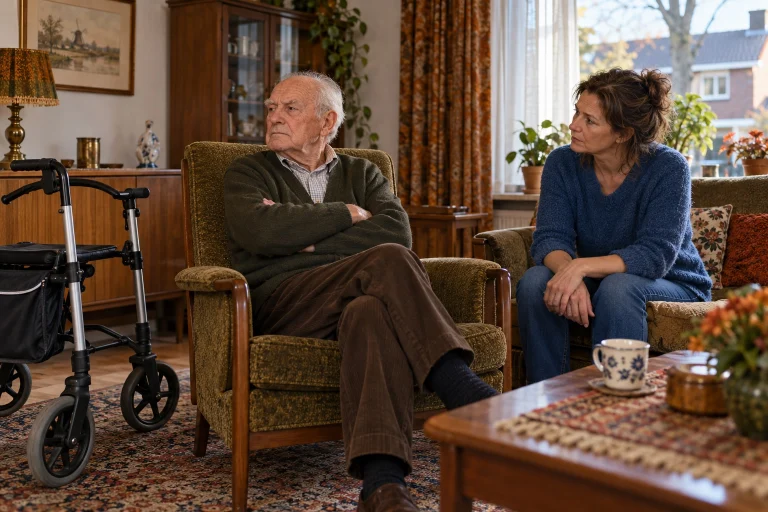
It can be difficult when your parent does not want to accept help. This article provides tools…
Read article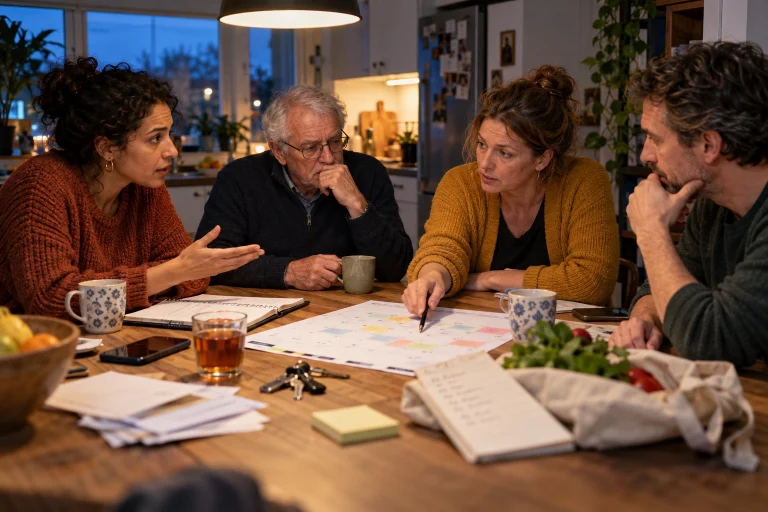
Dividing care within the family can be challenging, but with clear agreements and communication, it can become…
Read article
Caring for someone can raise many questions. Whether it's practical questions, doubts, sharing your worries or simply wanting to tell your story.
Sophie listens and thinks along with you – with understanding for your situation.