
Living will informal care: what should you arrange in time?
This article discusses the importance of a living will and power of attorney for informal caregivers, including…
Read article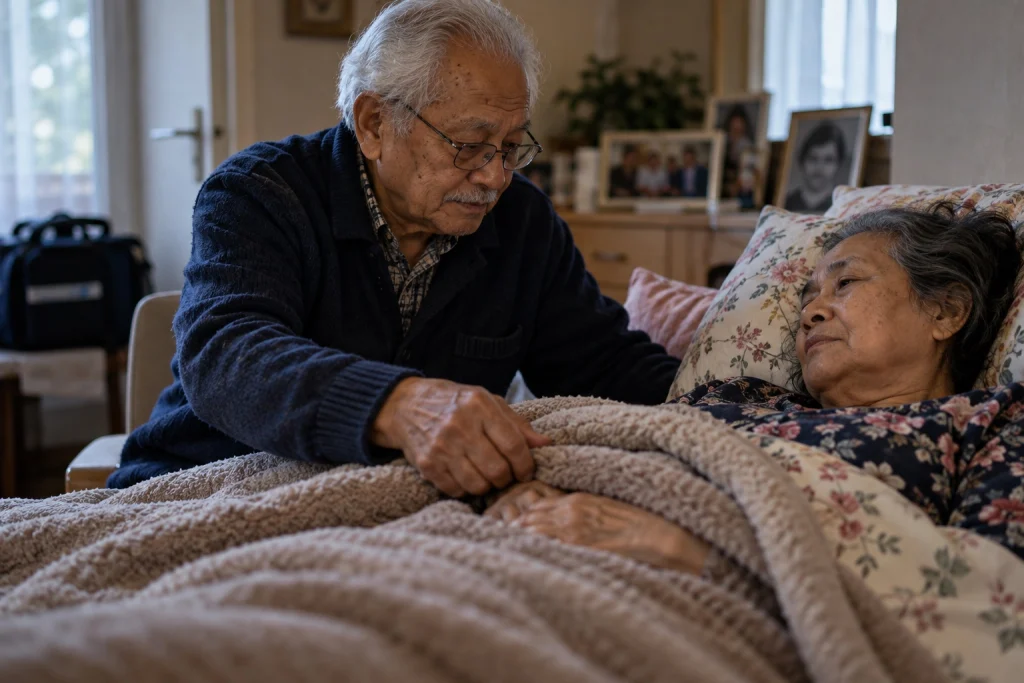
This article discusses the various forms of assistance available for people who wish to die at home, including palliative care, hospice, and volunteer support.
When your partner wants to die at home, it is important to know what help is available. Arranging palliative care at home can ensure that you can spend this final phase of life together as comfortably as possible. There are various caregivers and volunteers who can provide support, allowing you as a caregiver to also take the necessary rest.
The general practitioner plays an important role in palliative care at home. When arranging palliative care at home, the goal is for your loved one to feel as good as possible and to stay at home if that is their wish. The general practitioner is often the first point of contact and can help in creating a care plan. This plan may also include the involvement of district nursing and specialized palliative nurses.
Additionally, the general practitioner can prescribe medication for pain relief and other symptoms. They also provide support to the caregiver, who often takes on many caregiving tasks, such as bathing and dressing. It can be heavy, and therefore it is important to also look after yourself. Volunteers can, for example, keep company or stay overnight, so you can take a break. This is also known as respite care.
It is good to discuss in a timely manner what help is needed with the general practitioner and the district nurse. This ensures that everything is well arranged and that your loved one receives the care they need. Have you already spoken with the general practitioner about the care that is needed?
District nursing plays an important role in arranging palliative care at home. If someone wants to stay at home in the final phase of life, the district nurse can help organize the necessary care. This may include:
Additionally, it is important to discuss in a timely manner what help is needed. This can be done through the general practitioner or directly with the district nurse. If you are also providing care, it can be heavy. Volunteers can provide support, for example, by staying overnight, which is called respite care. This helps to maintain the care.
Do you have specific questions about what is possible in your situation?
A palliative team is a group of healthcare professionals focused on providing palliative care at home. This team may consist of the general practitioner, district nurses, and sometimes specialized palliative nurses. Their goal is to ensure that your loved one feels as good as possible in the final phase of life and can stay at home if that is their wish.
Arranging palliative care at home can help in various ways:
It is important to discuss in a timely manner with the general practitioner and district nurse what support is possible. This helps to maintain care and improve the quality of life.
A hospice offers a warm, homely place for people in the final phase of life when staying at home is no longer possible or desirable. There are two types of hospices:
The medical care is covered by insurance or the government. For the stay, you usually pay a personal contribution in an almost-home house, while this is often not the case in a high-care hospice. People typically stay in a hospice for an average of three weeks, and admission can often be arranged quickly, sometimes within a day.
For example, Hospice Zoetermeer provides care for people in the terminal phase. Here, nurses and trained volunteers work together to meet physical, social, psychological, and spiritual needs. Admission requires a palliative indication from the general practitioner or medical specialist.
Discuss with your general practitioner or the palliative team which care location best meets your wishes.
Volunteers can offer valuable support in the final phase of life by providing emotional and practical help. They are there to be present, which can help with staying awake or simply keeping company. This gives caregivers the chance to take a break or do other things, such as grocery shopping.
How volunteers provide support:
It is important to ask in a timely manner about available volunteer palliative support. This can be done through the chatbot at {{loket:palliatieve-vrijwilliger}} for information in Zoetermeer and the surrounding area. Also, discuss with the general practitioner or district nursing how the involvement of volunteers can be aligned with the professional care that is needed.
Have you already thought about what support you would like?
In the final phase of life, it is important to arrange palliative care at home properly. This ensures that your loved one feels as comfortable as possible and can stay at home if that is their wish. There are various types of medication available to relieve pain and other symptoms. The general practitioner and district nursing play an important role in prescribing this medication.
Arranging palliative care at home means that you receive support from various caregivers, such as:
It is important to discuss the possibilities in a timely manner with your general practitioner and district nurse. It can also help to seek support from caregiver organizations. This ensures that you are not alone during this difficult period.
What would help you the most in this situation?
This article discusses the importance of a living will and power of attorney for informal caregivers, including…
Read article
This article explains when someone is entitled to a Wlz indication and how to apply for it.…
Read article
An emergency plan is essential for informal caregivers to ensure that care for their loved ones continues…
Read article
Caring for someone can raise many questions. Whether it's practical questions, doubts, sharing your worries or simply wanting to tell your story.
Sophie listens and thinks along with you – with understanding for your situation.