
Respite Care: Temporarily Handing Over Care
Respite care offers caregivers the chance to take a breather by temporarily transferring the care of a…
Read article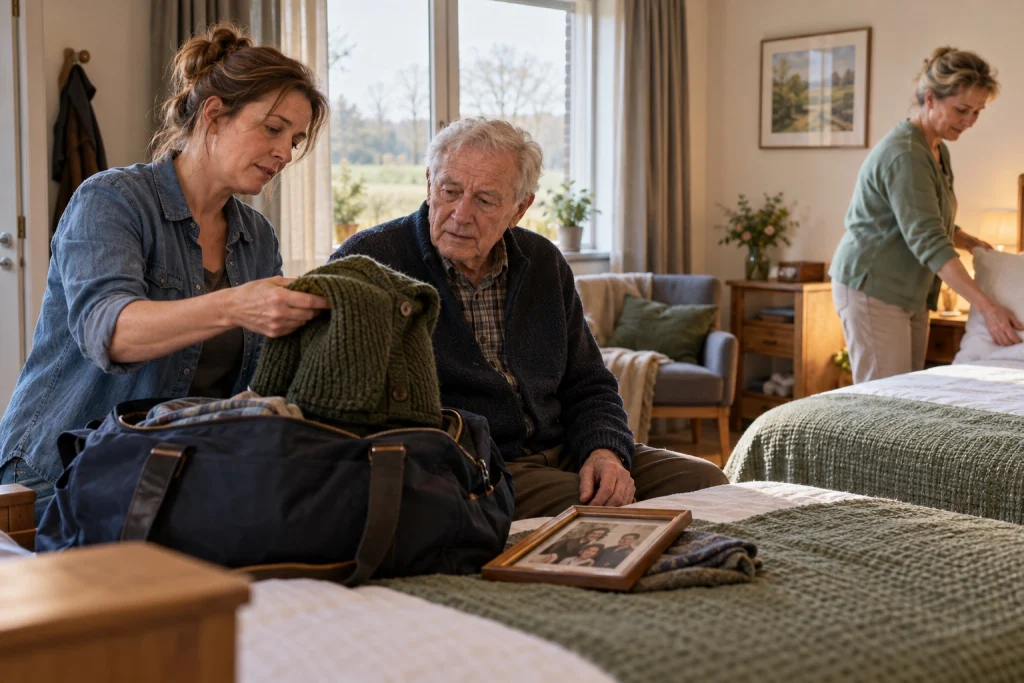
A moment of rest for the caregiver.
Respite care offers informal caregivers the opportunity to catch their breath while their loved one temporarily stays elsewhere. This article discusses the various options and routes for respite care.
Informal caregivers sometimes need a break, and respite care can provide a valuable solution. This means that your loved one can temporarily stay somewhere else, such as in a care hotel or respite house. In this article, we discuss the different forms of respite care, how to apply for it, and what you need to prepare.
Respite care and short-term stay are forms of respite support that help informal caregivers take a breather. With respite care for informal caregivers, your loved one temporarily stays in an institution, such as a care hotel or respite house. This can be for a few nights, up to a maximum of 72 hours per week. This gives you the chance to take a moment of rest.
Short-term stay can also take the form of weekend care, where your loved one stays for a shorter period. This provides the opportunity to temporarily hand over care, allowing you to take time for yourself. It is important to first check with your health insurer whether this care is reimbursed. If not, you can submit a Wmo notification to the municipality.
It is essential to schedule time for yourself. This helps you to have more patience and resilience in caring for your loved one.
To apply for respite care for informal caregivers, follow these steps:
Remember that providers and availability can change, so it is good to seek current information. For more details about short-term stays, you can check your municipality's website or the Wmo desk.
Have you already thought about how many days of respite care you need?
The costs of respite care for informal caregivers can vary depending on the situation and the care needed. In the case of short-term stays, where your loved one stays in an institution for a maximum of 72 hours per week, you pay a personal contribution. The amount of this contribution is determined by the CAK.
To cover the costs, it is important to first check with your health insurer whether replacement care is reimbursed. If this is not the case, you can submit a Wmo notification to your municipality. This can help reduce or cover the costs for respite care.
Here are some steps to follow:
This can help you temporarily hand over care for your loved one and take a moment to relax. Have you already thought about what form of respite care you would like to use?
There are various local options for respite care for informal caregivers that can relieve informal caregivers. Respite care or short-term stay means that your loved one temporarily stays somewhere else, such as in a care hotel, respite house, or with a host family. This gives you the chance to catch your breath.
In Zoetermeer, there are specific options for children and young people with disabilities or intensive care needs. The municipality refers to Meerpunt for youth care needs. It is important to discuss what support the child needs during the stay and how medical procedures will be arranged.
Do you want to know what is available in your area? Then contact the WMO desk or the informal caregiver desk. They can help you find the right respite care and short-term stay that fits your situation.
Respite care offers caregivers the chance to take a breather by temporarily transferring the care of a…
Read article
Respite care offers caregivers the opportunity to temporarily hand over care duties, allowing them to relax. This…
Read article
This article discusses the symptoms of overload in caregivers, including physical, emotional, and behavioral signals. It also…
Read article
Caring for someone can raise many questions. Whether it's practical questions, doubts, sharing your worries or simply wanting to tell your story.
Sophie listens and thinks along with you – with understanding for your situation.