
Wmo Application Process for Caregivers
Discover how to apply for Wmo support, from notification to decision, and what steps you can take…
Read article
Caring for an elderly parent can be overwhelming, especially if you don't know where to begin.
This article provides practical steps and resources to find the right support.
Caring for an elderly parent can be a significant responsibility, especially if you are not exactly sure what you need. It is important to start by mapping out the situation and the urgency of the care. This helps you take the right steps and find the appropriate help.
If you need help caring for an elderly parent, the first step is to clarify what kind of help you need. This can sometimes be challenging, but it is important to start. For example, you can contact loket:clientondersteuning; they can help you articulate your request for assistance.
Next, you need to find the right application route. For social support, you can go to the municipality, for nursing and home care, the district nurse is the right person, and for long-term intensive care, you can approach the CIZ.
Asking for help is always allowed, even if you don't feel 'heavy enough' yet. It is good to know that support is available at home. This helps you to cope for a longer time. What would you like to start with?
You can involve your general practitioner for help with caring for an elderly parent. This is a good first step to get support. Here are some steps you can follow:
If you find it difficult to ask for help or if your loved one does not want to accept help, the general practitioner can also play a role in this. Sometimes it helps if someone else, like the general practitioner, initiates the conversation.
What would you like to discuss with your general practitioner?
If you need help with caring for your elderly parent, the municipality can play an important role. The first step is to make a report at the Wmo-loket in your municipality. This is where you can request support. After your report, you will receive a confirmation. You can also submit a personal plan describing what help you need and why. This is voluntary and must be submitted within a week after the report.
After the report, the municipality will investigate your situation. In a conversation, you can explain what is not working and what help you are already receiving from relatives. It can be nice to bring someone along, such as someone from clientondersteuning.
Also, think about other forms of support, such as help from family, friends, or neighbors. It is important to have the conversation about care in a timely manner so that you can look together at what is needed. Have you already thought about what you specifically need?
If you need help with caring for an elderly parent, it is important to start by clarifying what support is needed. A good first step is to engage independent client support. They can help you apply for the right care and understand the options.
It is very normal to ask for help. You are not alone. Have you already thought about what kind of help you specifically need?
It can be difficult to ask for help, especially if you feel like you have to do everything yourself. A good first step is to formulate a concrete request for help. People around you often do not know what help you need. Therefore, specify a particular task and a moment. This can be something simple, like going grocery shopping together or accompanying someone to an appointment.
Also, look beyond your immediate family to friends, neighbors, or acquaintances. Help with caring for an elderly parent can also mean sharing tasks or just talking about what is going on. If you find it difficult to formulate your request for help, the mantelzorglijn can think along with you.
Additionally, it is important to set priorities. Ask yourself what really needs to be done and what can perhaps wait. Choose one task and ask specifically for help with something that someone else can do. If you have too many tasks on a regular basis, the loket mantelzorg can help redistribute the care.
What would you like to ask someone in your environment?
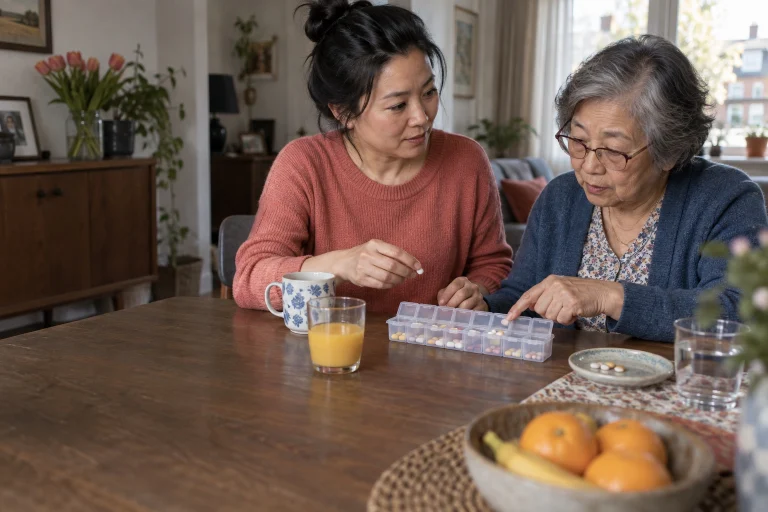
Discover how to apply for Wmo support, from notification to decision, and what steps you can take…
Read article
This article helps you understand which care law applies to your help request and where you can…
Read article
Independent client support offers free assistance with care questions and can guide you to conversations with the…
Read article
Caring for someone can raise many questions. Whether it's practical questions, doubts, sharing your worries or simply wanting to tell your story.
Sophie listens and thinks along with you – with understanding for your situation.